Strength training over 50 in Malta: a guide for you — and the person checking it out for you
How strength training works for the over-50s in Malta: qualified supervision, gradual progression, home visits. Written to be read by cautious family members too.
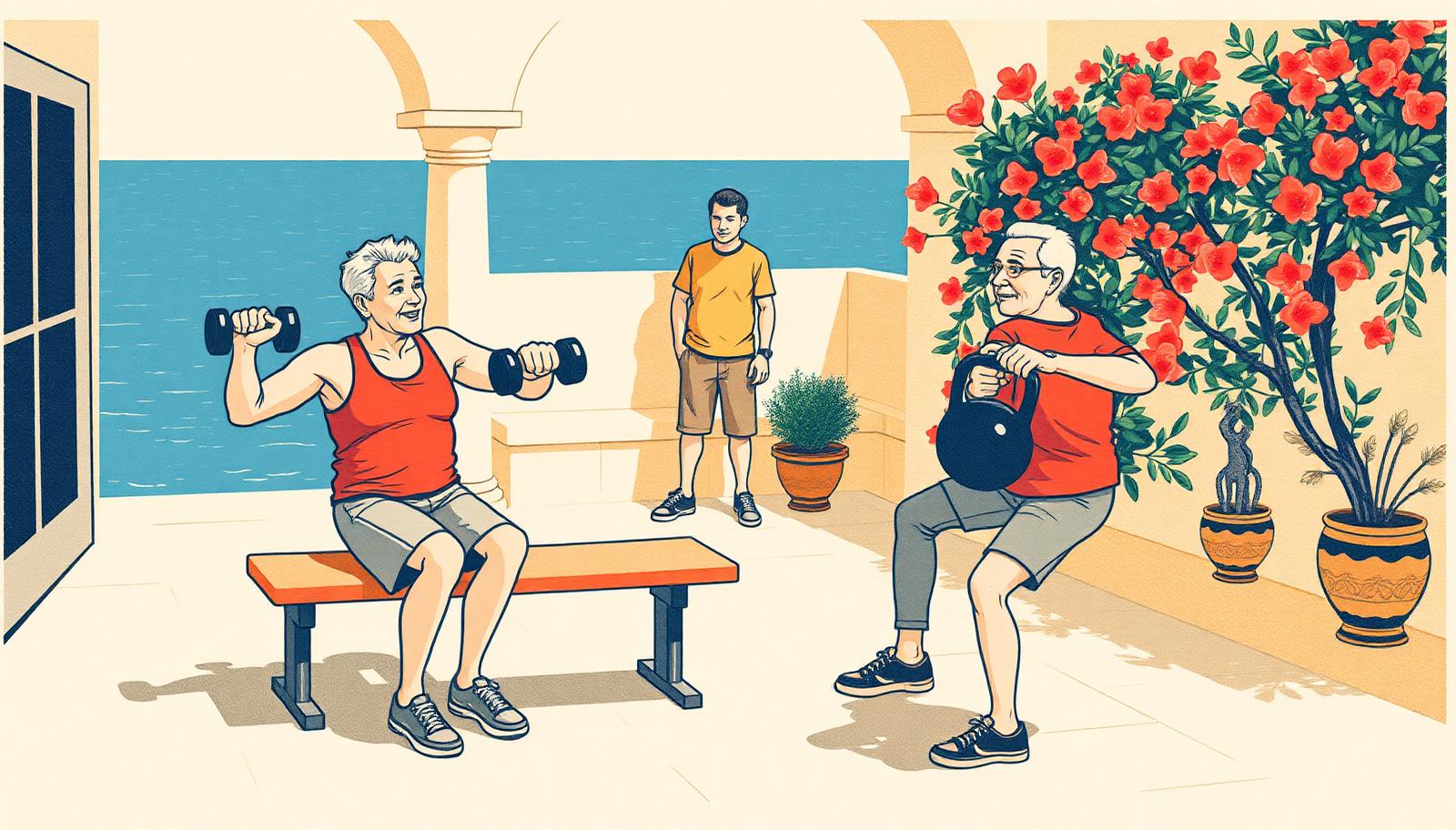
This page is written for two readers.
The first is you, if you're in your fifties, sixties or seventies and thinking about strength training — perhaps for the first time in your life. The second is the person checking this out on someone's behalf: the son or daughter whose mum mentioned "a trainer", the physiotherapist whose patient asked if it's a sensible idea. If that's you, welcome — you're reading this page exactly the way it was meant to be read, and the sections below are written to answer your questions, not just hers.
What this is, and what it isn't
Strength training for older adults, done properly, is about everyday capability: carrying shopping up a flight of stairs, getting up from the floor without using furniture, feeling steady on Malta's famously uneven pavements. Those are the outcomes we train for, and the only ones we'll ever claim.
What it isn't: medical treatment. I'm a personal trainer, not a clinician. Training with me is not physiotherapy, not rehabilitation, and not a substitute for either. Where a GP or physiotherapist should be involved, I'll say so plainly — including before we start, if anything in the initial conversation suggests it. Clients with clinical conditions, and pre- or post-natal clients, are outside my scope, and I refer them to appropriately qualified professionals rather than adapting around it.
What the training actually looks like
Clients at LivingFit range from 16 to 75, and the honest difference with older clients is not that the training is watered down — it's that it is more patient. More time on each movement, closer attention to form, smaller steps between levels. Nothing is loaded until the unloaded version is comfortable and confident. If the question underneath all of this is whether lifting weights is safe at this age, I've answered that one properly, with the caveats left in.
A typical session: a gentle moving warm-up, a small number of fundamental movements (sitting to standing, lifting from safe positions, carrying, pressing), and floor work — including, deliberately, practising getting down to the floor and back up, because that confidence is worth more than any number on a dumbbell.
Progression follows a tier system: each movement advances only when the current level is performed consistently well, and steps back without drama when it isn't. Anything flagged as a concern in our first conversation stays out of the programme entirely unless — and until — your GP or physio is comfortable otherwise.
For the person doing the checking
The verifiable facts, in one place:
- Qualifications: Sean Dunbar Smyth, Advanced Level 3 personal trainer; additionally certified in TRX, ViPR, kettlebell and group instruction.
- Screening: every new client completes a health questionnaire before anything else. Where it raises questions, the answer is a GP conversation first, not a workaround.
- Format: one-to-one, at a pace set by the client. No group classes unless wanted, no gym floor, no audience.
- Home visits: sessions can happen entirely at your parent's home. For many older clients this is the deciding factor — no parking, no stairs, no crowded gym.
- Terms: the first session is free, and there are no contracts. Single sessions or blocks of ten. Stopping is as easy as not booking the next one.
If you'd like to talk it through before your mum or dad books anything, phone me. That conversation is normal, and I'd rather have it than not.
The practical details
Sessions run at the LivingFit studios in Naxxar, Swieqi and Sliema, or — most popular with over-55 clients — at your own home, on weekday daytimes. Booking is by phone; you'll speak to me directly, not a receptionist.
Please note: the information on this page is general in nature and is not medical advice. If you have a medical condition, are recovering from illness or injury, or have been advised to limit physical activity, speak to your GP or physiotherapist before starting any exercise programme. I'm happy to coordinate with them — several clients' programmes exist precisely because a GP said "some supervised strength work would be sensible" and we took it from there.
Written by Sean Dunbar Smyth.