What HRV actually tells you about training — and what it doesn't
HRV is the most misread number in fitness. What heart rate variability genuinely signals about readiness, what it can't tell you, and how to train off it.
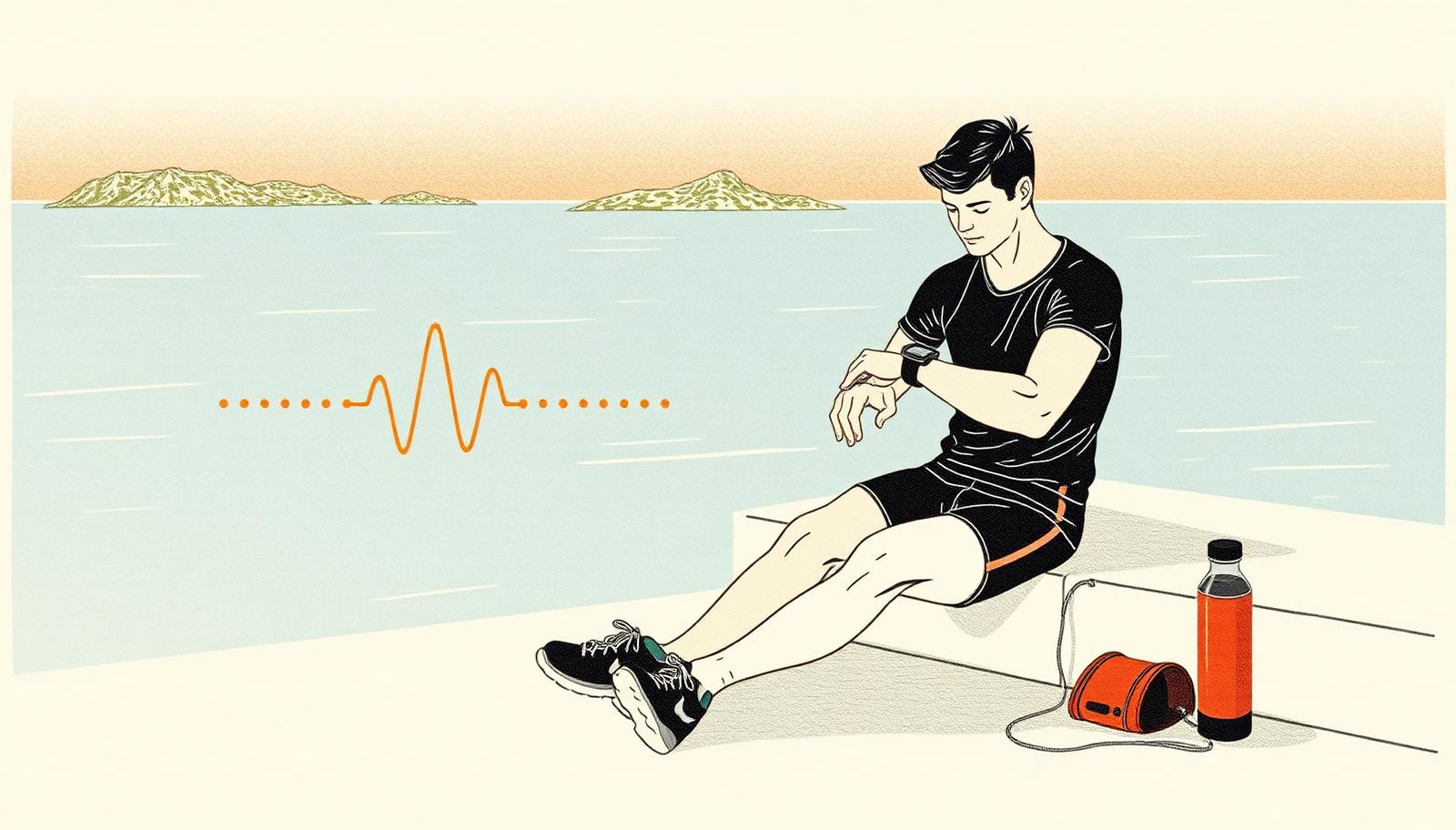
Heart rate variability has become the most quoted, most misread number in fitness. Your watch gives you a score every morning; the marketing around it implies that score is a verdict on you. It isn't. HRV is genuinely useful — I build training around it — but it's useful for a narrower, more specific reason than the wearable industry suggests. This is an attempt at the honest version.
What HRV is actually measuring
Your heart doesn't beat like a metronome. The gaps between beats vary, beat to beat, and that variation is largely steered by the autonomic nervous system — the balance between its sympathetic ("mobilise") and parasympathetic ("recover") branches. Heart rate variability quantifies that variation, usually measured overnight or on waking.
Higher variability generally reflects a system with recovery capacity to spare. Suppressed variability — relative to your own baseline — often accompanies accumulated stress: hard training, poor sleep, illness brewing, alcohol, jet lag, a brutal work week. The signal is real. What people do with it is where things go wrong.
What it genuinely tells you
Used properly, HRV answers one question: how ready is my system today, compared with my own normal?
That's it — and that's valuable. Tracked against your own baseline over weeks, it's a decent early-warning gauge for "you're carrying more fatigue than you think", frequently flagging trouble a day or two before your legs agree. It's a readiness trend, and readiness is a genuinely good input for deciding what today's training should look like.
What it can't tell you
- It is not a fitness score. HRV doesn't measure strength, endurance or progress. Training for months won't necessarily "raise your HRV", and a high number isn't an achievement.
- Single days mean little. The measurement is noisy. One low morning after late food or a glass of wine is weather, not climate. Trends over days and weeks are the unit that matters.
- Comparison with other people is meaningless. Baselines differ enormously between individuals for reasons that have nothing to do with health or fitness. Your number versus your friend's number is not a conversation.
- It doesn't diagnose anything. A strange reading is a reason to notice, maybe to rest — not a medical readout. Wearables are not clinical devices.
What to actually do with it
The practical rule: let readiness shape the size of the session, not whether you show up.
Recovered — sleep good, HRV at or above your baseline? Train fully; push what's planned. Suppressed after a rough night or a long flight? Don't cancel — shrink. Shorter session, fewer sets, quality kept, grinding removed. Consistency survives, and the fatigue doesn't compound.
This is exactly the logic built into the LivingFit app. Sync a wearable and each day's session is adjusted around your HRV, resting heart rate and sleep — a bad night literally shortens the session before you've had to make a willpower decision about it. No wearable? Three quick questions about sleep and soreness do a humbler version of the same job. (Honestly: for guiding training, consistent subjective answers beat an inconsistently worn strap.) If you want the longer version of how that scoring works, here is what the app does with readiness before it writes your session.
A note for the frequent traveller
If you live between airports, HRV gets simultaneously more useful and more misleading. Jet lag and disrupted sleep suppress it legitimately — your system genuinely is under load, and training should genuinely shrink those days. But the readings during timezone transitions are also noisy, so expect a couple of odd days after a long-haul flight and judge the week, not the morning. The practical benefit is that a readiness-adjusted plan keeps adapting on the road instead of breaking — which, for travellers, is the entire difference between a programme that survives and one that dies in a hotel in week one.
The LivingFit app is free, permanently, with no card required — wearable sync included. If you've been staring at an HRV score every morning wondering what to do with it, the answer is: let it quietly resize today's training, and get on with your day.
Written by Sean Dunbar Smyth.